Showing posts sorted by relevance for query Economy. Sort by date Show all posts

Friday, September 17, 2021

A 1997 story about virtual money and the global economy

Interestingly, virtual money and the globalization of our economy is a field with depth and many publications refer to this topic. Particularly, the global economy cannot be stopped, unless we understand how to make everything by ourselves. But, as the latter is impossible, we must link our local economies to external competitive advantages of other countries and their economies.

Wednesday, April 15, 2020

Responding to unemployment in United States, Europe, and Britain

The worst economic fallout since the Great Depression 1929 just started, by accelerating protectionism and autarky across the world. In other words, we are facing the greatest challenge since the establishment of the international monetary system at the 1944 Bretton Woods agreement, as a fully negotiated monetary order intended to govern monetary relations among independent states. The coronavirus pandemic is a global crisis; hence it can only be solved at a global level.

Tuesday, October 24, 2023

Tuesday, April 07, 2020

Friday, April 24, 2020

First official economic insights of the coronavirus impact

It took just a matter of a few days to shut down a great portion of world economy. Millions of people are already out of work for most of countries across the world, and losses in tax revenue is a huge challenge for governments. This pandemic outbreak has limited corporate resources, thus immediate layoffs are a gigantic social problem.

Friday, November 01, 2019

Country rating in a changing global economy

The world economy is presenting an accelerated change. Protectionism, as the process of creating barriers to the trade flows, automation as a process of adopting technology, especially in manufacturing, digital data flows with globalized services, and climate change as a systemic risk, create an environment with unprecedented developments.

Friday, March 18, 2022

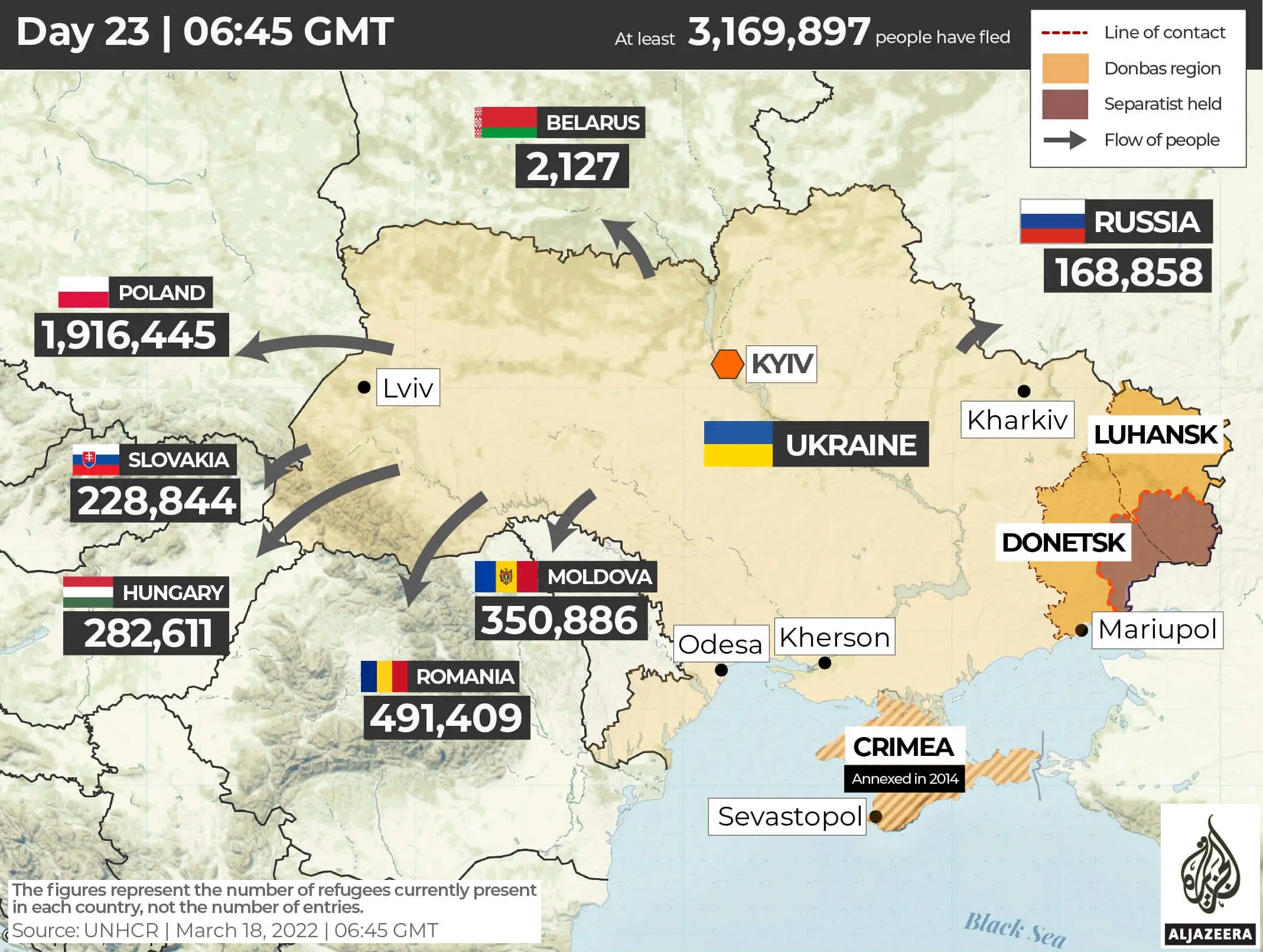
Borders and sanctions: Russia out of the economic game

A sanction is actually a penalty imposed by one country (or a group) on another, and it is used as a tool to stop the country acting aggressively or breaking international law. Sanctions are designed to hurt the economy in general and the finances of individual citizens of a given country. So, is Russia still in the global economic game?

Tuesday, April 28, 2020

Τhe 2007 pre-pandemic plan and the validity of R0

The Interim Pre-Pandemic Planning Guidance published by the Center for Disease Control and Prevention (CDC) on February, 2007, is a community strategy for pandemic influenza mitigation in the United States. This document provides interim planning guidance including several measures other than vaccination and drug treatment that might be useful during an influenza pandemic to reduce its harm.

Thursday, November 02, 2023

Monday, June 12, 2023

Sunday, February 27, 2022

Saturday, November 15, 2025

A historical analysis of US employment trends over 150 years

Employment trends are a reflection of economic, technological, and societal transformations. Understanding employment trends over time is crucial for policymakers, economists, and business leaders. The visualization of 150 years of United States (US) employment history illustrates major shifts in sectoral employment shares, revealing the impact of industrialization, automation, and globalization.

   In the late 19th century, agriculture dominated employment, accounting for a significant portion of the workforce. The mechanization of farming, urbanization, and industrial growth led to a steady decline in agricultural jobs. Similarly, household work, once a major sector, saw a reduction due to social changes and technological advancements.

   The early to mid-20th century saw a boom in manufacturing jobs, driven by industrialization and wartime economies. However, globalization, outsourcing, and automation led to a decline in manufacturing employment towards the late 20th century.

   The late 20th and early 21st centuries have been marked by the expansion of professional services, healthcare, education, and financial services. Technological advancements and an increasingly service-oriented economy have contributed to this shift.

   Industrialization and mechanization reduced reliance on labor-intensive agriculture. Globalization facilitated outsourcing and shifting manufacturing jobs overseas. The digital revolution created new employment opportunities in information technology, telecommunications, and finance. Policy and regulatory changes influenced labor markets, including labor protections and minimum wage laws.

   Continued automation and artificial intelligence may disrupt traditional employment models. Upskilling and education will be crucial for adapting to the evolving job market. The gig economy and remote work may shape future employment patterns.

   In conclusion, the transformation of US employment over the past 150 years underscores the dynamic nature of labor markets. From agriculture to manufacturing and now to services, economic and technological forces continue to reshape employment opportunities. Understanding these trends provides valuable insights into workforce planning, education, and economic policy.

Thursday, May 28, 2020

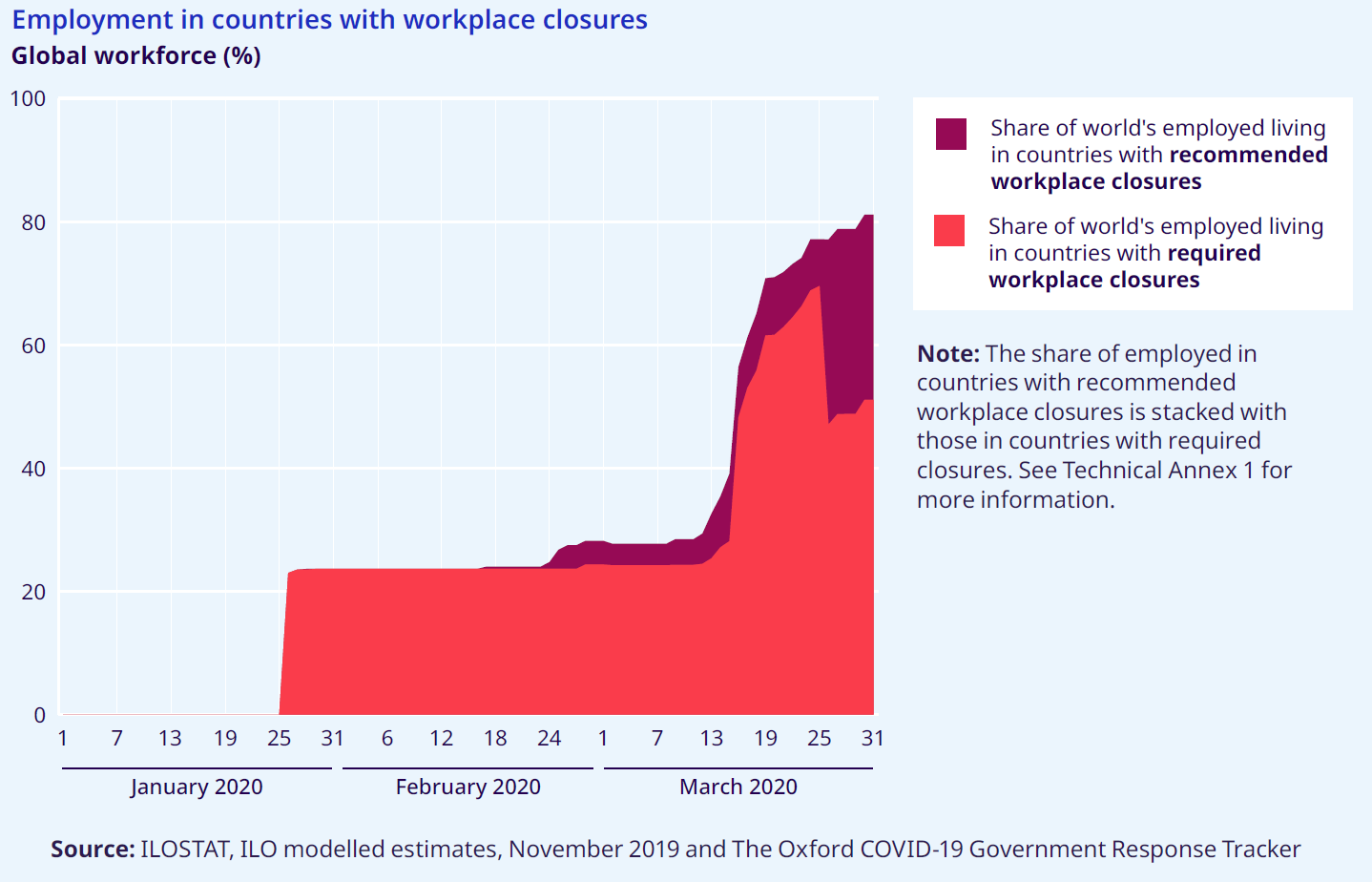
Over 81% of global workforce affected by full or partial workplace closures

International Labor Organization (ILO) recently reported that the COVID-19 pandemic is having a catastrophic effect on working hours and earnings globally. The current crisis is expected to wipe out 6.7% of working hours across the world in the second quarter of 2020, which is equivalent to 195 million full-time workers.

Monday, September 26, 2022

Friday, December 10, 2021

Thursday, April 03, 2025

China and Europe vow to respond to US's tariff war

President Donald Trump declared that foreign trade and economic practices have created a national emergency, and his order imposes responsive tariffs to strengthen the international economic position of the United States and protect American workers.
 
   The president of the United States said on April 2, 2025, on a new global trading order announcement, that a levy of 10% would apply to nearly all US imports from April 5 as he also revealed additional so-called reciprocal duties, meaning total tariffs as high as 20% on the EU and 24% on Japan will go into effect on April 9.
 
 
   US tariffs on China, the world’s biggest exporter of goods, will rise to 54% after Trump imposes a further 34% duty on top of 20% levies he placed on China earlier this year. Country’s commerce ministry on Thursday warned it would retaliate against US decision.
   “History has shown that raising tariffs will not resolve the US’s own problems,” said a commerce ministry spokesperson.
   The EU is “prepared to respond”, European Commission president Ursula von der Leyen said on Thursday, while emphasising the bloc first wished to negotiate. Germany’s finance minister said he expected a “strong response” from the EU.
   Japan’s chief government spokesperson Yoshimasa Hayashi expressed “serious concern” over the US. Prime Minister Giorgia Meloni of Italy said President Trump’s tariffs were “a measure that I consider wrong.”
 
 
   According to the White House, the annual cost to the US economy of counterfeit goods, pirated software, and theft of trade secrets is between 225 billion and 600 billion US dollars. In 2024, the US trade deficit in goods exceeded 1.2 trillion US dollars.

Friday, December 23, 2022

Rules to protect the essential infrastructure of the European Union

The European Parliament has recently given its final approval to rules on improving the protection of the European Union’s (EU) essential infrastructure, with 595 votes in favor. The event of boosting critical infrastructure protection in the EU means that we are facing new challenges in this globalized environment.

Thursday, March 12, 2020

Thursday, April 04, 2019

Saturday, November 15, 2025

E-learning is a valuable option for education

The 2019 pandemic outbreak has affected the world economy with an unprecedented wave of social distancing and isolation. It has brought significant changes to education and training systems globally as well. Learning, teaching, and communication in general were inevitably transferred to online tools, as this pandemic event accelerated the digital transformation.


   Remote education has exploded in 2020 as an emergency response to the widespread physical closure of education and training institutions. The community of education had to adopt and support distance learning as the ultimate solution. This fast-paced shift has speeded up further digital transformation of education.

   From my teaching experience having lectures on the field of business administration, international business, and human resource management, physical communication cannot be entirely substituted by digital methods. However, choosing the appropriate digital channels matters.

   Indeed, synchronous distance learning emerges a plethora of challenges. Internet speed connection and stability is a critical one, while having the hardware and software needed must not be taken as a given. Many students or teachers do not have the appropriate machinery to support a smooth distance learning experience. Additionally, not all people have the experience, confidence, knowledge, skills, and competence needed to organize and deliver distance education effectively.

   On the contrary, asynchronous distance learning, enhanced guidance to students, and personal willingness are the key to distance learning success. Indeed, asynchronous methods give you the ability of scheduling, mastering time needed to absorb new information, and perceive professional multichannel learning.

   Moreover, it is critical if professors can record lectures at a fully equipped studio and upload them after the appropriate montage to fit the material to modern needs. Electronic classes can be supported by digital books and other material in electronic format, hence making the whole experience even more interactive. It is crucial to adapt and prepare educational content and to ensure its use in distance learning and virtual environments. Accordingly, continuous monitoring of the feedback mechanisms and information provided is vital for the development of a successful digital community.

   For instance, one of the major challenges has been the issue of ensuring inclusion and equal access to quality distance learning opportunities. But, if we think about how many students and professionals cannot have physical access to educational places due to mobility challenges and time management issues, being economically disadvantaged, or geographically isolated, then both methods (physical and distance learning) have disadvantages. Also, managing assessment and grading is a difficult challenge, while this requires the integrity and awareness of both students and professors.

   In conclusion, distance learning as an attempt to ensure the continuation of the learning process is critical. Society must be well-informed and open to adopt new training methods as the spread of digital tools cannot be reversed. In this respect, physical contact and experience must not be interrupted, as they are environments that provide a sense of professional structure and of community and opportunities for socialization and status. But digital tools could support more people to be educated, even if they do not have the required means needed to access traditional training methods.